The Sensitive Data You Can't See: Bringing Classification to SMB File Shares

For many enterprises, some of the most sensitive data isn't stored in the cloud.
It's sitting on decades-old file shares. Department folders. Network drives. NAS devices. Windows servers. Hidden deep inside sprawling SMB environments that have grown over years of business operations.
These repositories often contain employee records, customer information, financial documents, contracts, healthcare data, and countless other sensitive files. Yet many organizations lack a reliable way to understand what data exists, where it resides, or which repositories present the greatest risk.
With SMB Classification, MineOS brings long-overdue visibility to one of the most overlooked repositories of enterprise data.
Bringing Visibility to One of the Largest Untapped Data Repositories
Despite years of digital transformation, many organizations still rely on SMB file shares to store critical business information.
These environments often serve as vast repositories of unstructured data, containing years of customer records, employee information, contracts, financial documents, presentations, spreadsheets, emails, and operational files accumulated across departments and business units.
The challenge is that few organizations have a clear understanding of what these repositories actually contain. Data is spread across thousands of folders and millions of files, often with unclear ownership and limited documentation. Over time, file shares become a growing collection of business-critical information that is difficult to assess, govern, or prioritize.
Unlike cloud applications, SMB environments are notoriously difficult to evaluate at scale, leaving organizations with limited insight into what sensitive data exists and where it is concentrated.
Imagine a global manufacturing company preparing for a compliance audit.
The security team has complete visibility into cloud applications, SaaS platforms, and databases. But when auditors ask where employee payroll records, customer contracts, and archived healthcare documents are stored, the answer becomes less clear.
Many of these files live on shared network drives that have existed for years. Multiple teams access them. Ownership is unclear. Documentation is outdated. Nobody knows exactly what sensitive information resides there.
The organization faces a challenge: making compliance and governance decisions without a clear understanding of its data landscape.
SMB Classification gives teams the context they need to identify which repositories require attention first.
From Unknown to Actionable
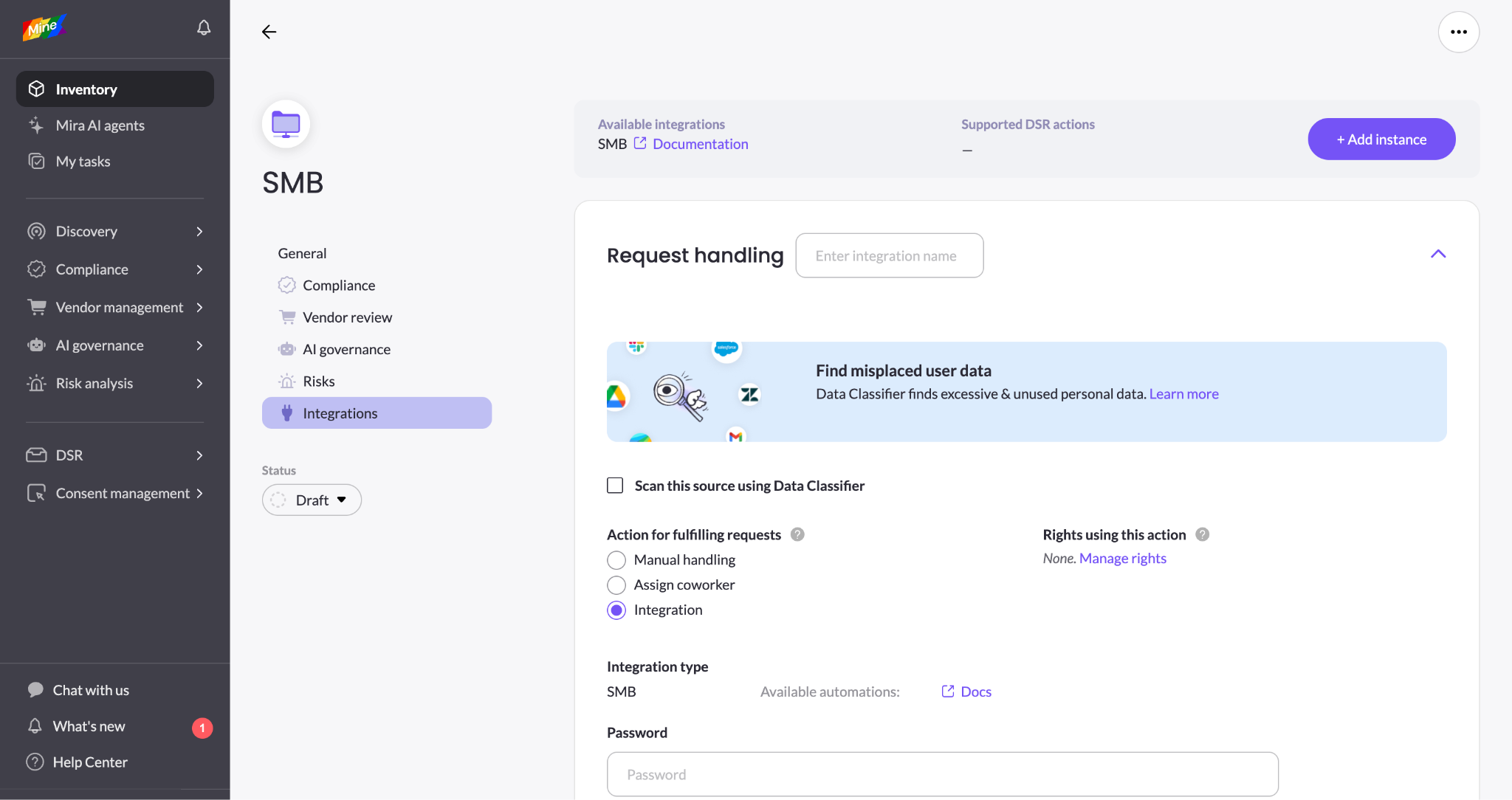
MineOS connects directly to SMB file shares and identifies sensitive information across supported file types.
Instead of requiring organizations to manually review vast repositories, MineOS provides a clear view of the types of sensitive data that exist and where they are concentrated.
Teams can quickly identify up to 80 different types of data:
- Personal information (PII)
- Health-related information (PHI)
- Payment card information (PCI)
- Additional sensitive data categories
This enables organizations to focus limited resources where they can have the greatest impact, rather than treating every repository as equally risky.
The result is more than visibility. Teams can quickly identify high-risk repositories, prioritize reviews, and make informed decisions about retention, governance, and compliance initiatives.
Instead of spending weeks manually investigating file shares, organizations gain a clear understanding of where sensitive data is concentrated and where action is needed first.
The Problem Many Teams Face
Consider a company preparing for a privacy audit after years of growth through acquisitions.
The organization operates dozens of file servers inherited from different business units. Some folders have existed for more than a decade. Ownership is unclear. Documentation is outdated.
The compliance team knows sensitive information is stored somewhere across the environment, but not exactly where.
Without visibility, every investigation becomes a manual project.
With MineOS, the team can quickly understand where sensitive information is concentrated, prioritize reviews, and focus resources where they will have the greatest impact.
Instead of searching blindly, they can work from evidence.
Faster Insights, Lower Operational Burden
Large file storage environments can contain billions of files and petabytes of unstructured data accumulated over years of business operations.
Scanning every file can be costly, time-consuming, and operationally challenging.
To provide visibility efficiently, MineOS uses intelligent sampling across shared drives to identify and classify sensitive data.
This approach enables organizations to identify high-risk repositories faster, without the time and operational overhead of exhaustive scans. Rather than waiting days or weeks for a full-file review, organizations can typically begin analyzing classification results within 1 hour.
Gain Visibility Into Your SMB File Shares
Sensitive data doesn't stop at the cloud - and neither should your visibility.
SMB Classification uncovers sensitive data across file shares, revealing which repositories require attention and enabling teams to prioritize action with confidence.
Whether you're preparing for an audit, strengthening data governance, or gaining a clearer understanding of your data landscape, the integration transforms previously unknown repositories into actionable insight.
By extending classification to SMB file shares, organizations can bring overlooked repositories into their privacy and governance programs, creating a more complete picture of where sensitive data lives across the business.
Explore how SMB Classification uncovers sensitive data across SMB file shares, surfaces high-risk repositories, and supports your privacy, compliance, and governance initiatives.
Schedule a demo and see SMB Classification in action.
Related Stories


Ready to build your own autonomous kingdom?
Ready to build your own autonomous kingdom?