A New Data Privacy Regulation Just Passed - Now What?

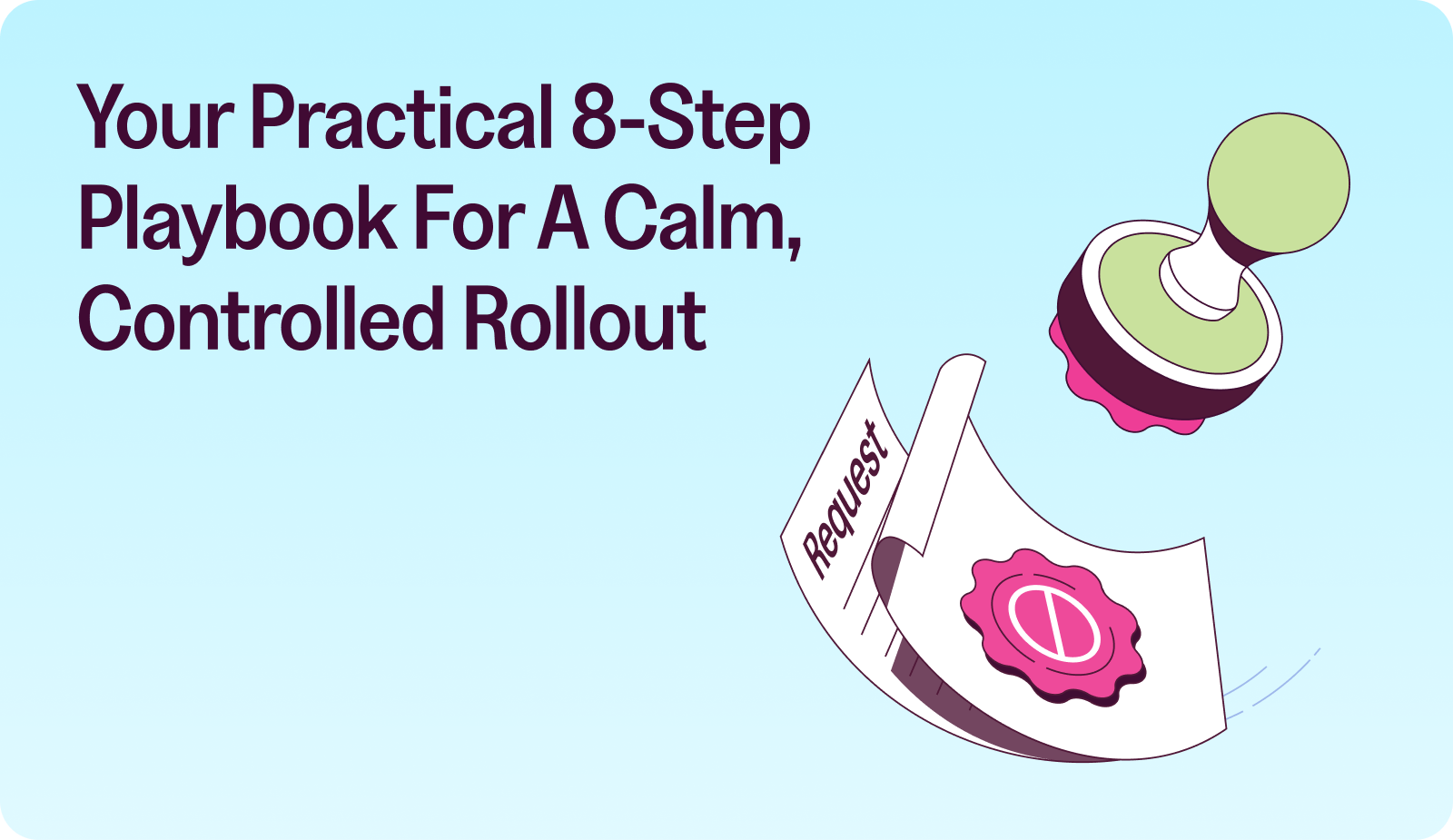
When a new privacy law drops, most companies react by asking: What does this mean for us, and how fast do we need to move? New regulations can feel like a sudden threat, especially when your data environment is complex, and your privacy work relies on manual effort. Perhaps that’s why around 70% of business executives state that the negative impact of rising regulatory complexity is preventing their company from launching new products or entering new markets.
But when the right data privacy platform is in place, new regulations are rarely a true disruption. You already know what data you have, where it is stored, how it flows, and which vendors touch it. You already have monitoring, workflows, reporting, and proof in place. Instead of starting from scratch, you need to map what changed, identify gaps, and adjust what needs adjustment.
This step-by-step guide provides a practical plan, assuming your privacy program is already running on a platform that supports continuous data mapping, automated workflows, and no-code capabilities. If that’s not the case, we hope to inspire you to embrace this approach.
Step 1: Confirm What Actually Changed
A new law can introduce entirely new obligations, but it can also be a remix of familiar principles with new timelines, definitions, and enforcement expectations. The goal is to clearly define the delta and create a short internal summary explaining what’s new.
How Mine Can Help
- MineOS provides a centralized Regulatory Library and templates that are updated as laws evolve, helping you quickly identify which new obligations (like specific US State laws or the AI Act) apply to your existing inventory.
Step 2: Compare The Regulation To Your Actual Data Reality
After fully understanding the new law requirements, it’s time to examine your data reality. After all, regulators and partners care about how your organization processes data in practice. That means connecting the law to your systems, data types, teams, and vendors. You want to provide a clear view of which data categories and processing activities are affected, where they occur, and which third parties are involved. You are also looking for edge cases that suddenly change the risk level.
How Mine Can Help
- MineOS continuously maps data across systems, forming a living, updated inventory.
- The Discovery Agent detects new data sources, shadow IT, and AI usage.
- The sub-processor tracking capabilities show which third parties are in the flow and keep lists current without manual updates.
- The AI governance capabilities provide information on all AI tools, datasets, and projects.
Step 3: Run A Practical Gap Analysis
After reviewing all your data systems and listing the areas that require attention, you must run a detailed gap analysis to identify the legal, financial, or reputation risk. You can rank gaps by impact and likelihood, then focus on the few changes that will immediately and meaningfully reduce exposure. What matters now is establishing a defensible baseline quickly, with audit-ready evidence.
How Mine Can Help
- The Risk Agent flags high-risk systems, unmanaged tools, and missing governance signals, and prioritizes remediation by impact.
- Vendor risk assessment capabilities help quantify vendor exposure, which is especially useful when new laws expand processor obligations or oversight expectations.
Step 4: Set Clear Ownership
New regulation projects break down when ownership is fuzzy. Security executives assume the Compliance team is in charge, Product assumes it is just policy work, and everyone is surprised when a deadline approaches and the implementation is incomplete. Assigning clear responsibilities from the start is crucial, as is building strong communication lines and ensuring everyone is on the same page.
How Mine Can Help
- MineOS serves as a single source of truth, so the program is managed in one place instead of across email threads and stale documents.
- Workflows and alerts make ownership clear, track progress, and reduce missed steps.
Step 5: Translate Legal Requirements Into Operational Rules
Privacy compliance cannot remain at the policy and intention level. Organizations must translate obligations into concrete rules and workflows that teams can follow consistently and can be proven later.
This includes updating consent requirements, updating privacy rights management, changing vendor collaborations, setting rules for high-risk processing, and more. Automate each step when possible.
How Mine Can Help
- The Consent Management tools help set up updated consent banners and maintain consent history as proof of compliance.
- The Privacy Portal can be configured to support specific rights, ensuring customers can easily exercise their privacy rights as required by law.
- Automated Data Policy Enforcement allows you to define rules and receive alerts when reality drifts from policy.
- AI Governance helps track AI assets and conduct risk assessments to ensure alignment with regulatory frameworks.
Step 6: Update Vendors, Sub-Processors, And Contracts Without Chaos
Many regulations include third-party management obligations, and vendors often become the practical bottleneck. You may need updated DPAs, stronger oversight, clearer sub-processor transparency, or new contracts.
How Mine Can Help
- Sub-Processor Tracking keeps your vendor lists accurate and directly tied to real data flows.
- Vendor Scout tools provide a live view of vendors’ behavior and offer clear remediation guidance.
- Autofill pre-fills questionnaires using verified data and automatically attaches relevant evidence.
Step 7: Build Solid Enforcement And Produce Documentation
Regulators want evidence that your privacy program is effective. This includes updated governance documentation, proof of controls, and a clear internal rationale. The goal is to make sure that if a partner or regulator asks for proof, you can provide it quickly without scrambling. This is another way mature privacy programs separate themselves from reactive ones.
How Mine Can Help
- Autofill Agentprepares RoPAs, TIAs, DPIAs, and other governance documents using live system insights.
- MineOS reporting lets you export up-to-date documentation without the version control issues of manual files.
- Autopilot handles DSR fulfillment end-to-end, while eDiscovery capabilities generate audit-ready documentation with full traceability and evidence.
Step 8: Monitor And Adapt
Most new laws evolve, and many include a gradual rollout by definition. Your organization also changes, and so do the vendors and partners you work with. If you treat compliance as a one-time rollout, you will drift out of alignment. The right mindset is always continuous, so keep monitoring and adjusting to stay ahead of the privacy game.
How Mine Can Help
- The Discovery Agent continuously detects new systems, shadow IT, and AI usage as you evolve.
- MineOS keeps the privacy program operating as a living system.
Stay Ready with Mine
A new data privacy regulation is only destabilizing when your privacy program relies on manual effort and partial visibility. When you already have continuous mapping and automated workflows that produce evidence, change is easily manageable. With the right platform in place, new regulations become an adjustment, not an emergency.
Want Mine to turn this guide into your organizational reality? Let’s talk and make it happen.
Related Stories
Ready to build your own autonomous kingdom?
Ready to build your own autonomous kingdom?